openID
openID
Open Possibilities.
The Institute of Design has been training strategic designers, leaders, and changemakers for nearly a century. Now, for the first time in 30 years, we’re opening our doors to the entire Illinois Tech community.
openID is a flexible program of courses in strategic design—built specifically for students in engineering, computing, business, sciences, and every other discipline at Illinois Tech. No design background required. No commitment to a full degree.
Whether you’re curious about how designers think, or you want a credential that sets you apart, openID is your entry point.

How to Participate
Take a course. Explore what design can do.
openID courses are open to all degree-seeking Illinois Tech students and can be taken individually, in any order. Bring a design lens to the problems you’re already working on—no prerequisites, no pressure, just new ways of seeing.
Each course is 3 credits, open to all degree-seeking Illinois Tech students, and can be taken in any order. There is no required sequence.
OPEN ID COURSES
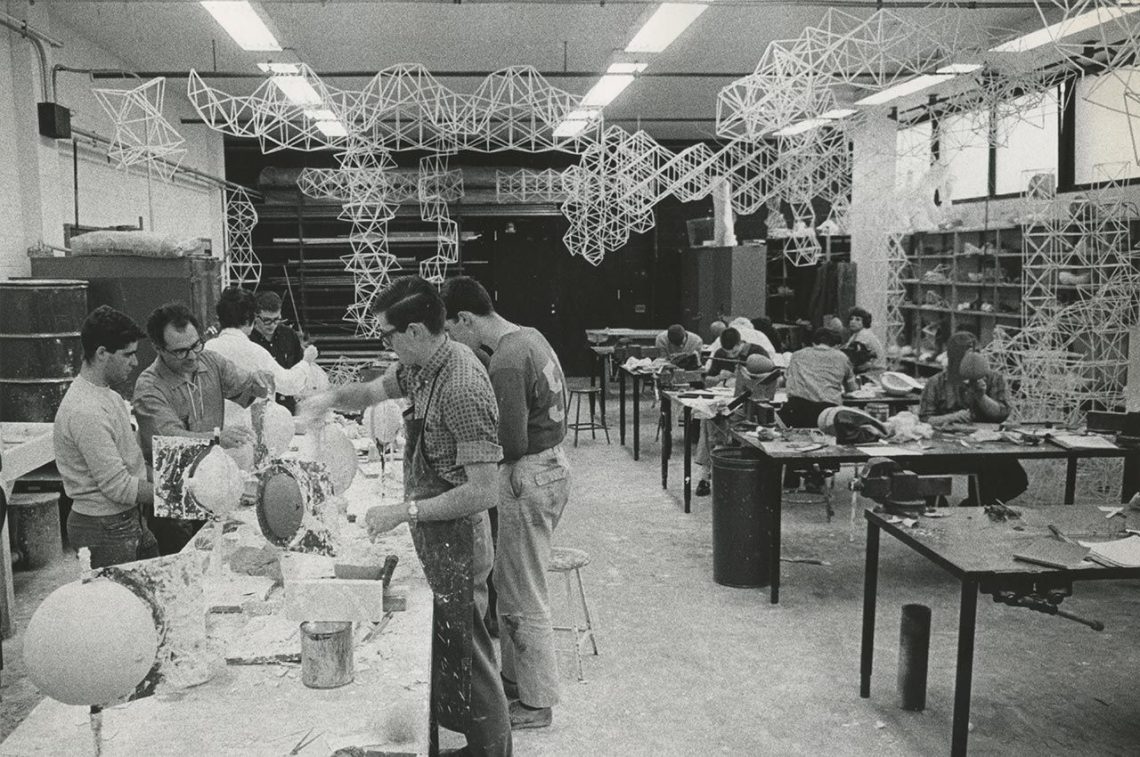
Founding an American Bauhaus
Understanding Design
Design is everywhere—in the products you use, the systems you navigate, the policies that shape your life. But how did it get there, and who decided? This course gives you the critical vocabulary and historical grounding to engage with design as a discipline: where it came from, what it does, and where it’s going.
What you’ll learn:
- How design operates as a discipline and how it connects to your own field
- The major forces—social, historical, political—that have shaped design practice from industrialization to today
- How to evaluate design decisions through the lens of values, ethics, and responsibility
- How to develop and articulate your own point of view on the role of design in the world
Course modules:
- Design as a Domain and Disciplinary Practice — What design is, how it’s structured, and how designers use methods and tools
- Design Histories and Societal Impacts — Major developments from industrialization through the late 20th century and their global effects
- Contemporary Design, Ethics, and Futures — Today’s practice—including service design and UX—and the responsibilities designers carry

Designing Product Opportunities
Good ideas don’t arrive fully formed. They’re built—through research, synthesis, and disciplined thinking. This course teaches you the design thinking process that ID practitioners use to move from a fuzzy problem to a clear, defensible direction. You’ll learn to frame issues, develop a point of view, and produce a strategic plan for moving forward.
What you’ll learn:
- A three-phase model for design thinking: define issues, establish a point of view, produce a development plan
- How to translate research findings into actionable frameworks and direction-setting artifacts
- How to select the right methods—brainstorming, design principles, user stories—for a given context
- How to move fluidly between strategy and implementation, at whatever level of detail the project demands
Course modules:
- Framing and Context — Researching deeply, structuring what you learn, and defining the real problem
- Forming a Point of View — Clustering insights, coding data, translating findings into needs and specifications
- Concept Development — Generating ideas, making decisions, and producing a development plan with experiments and prototypes
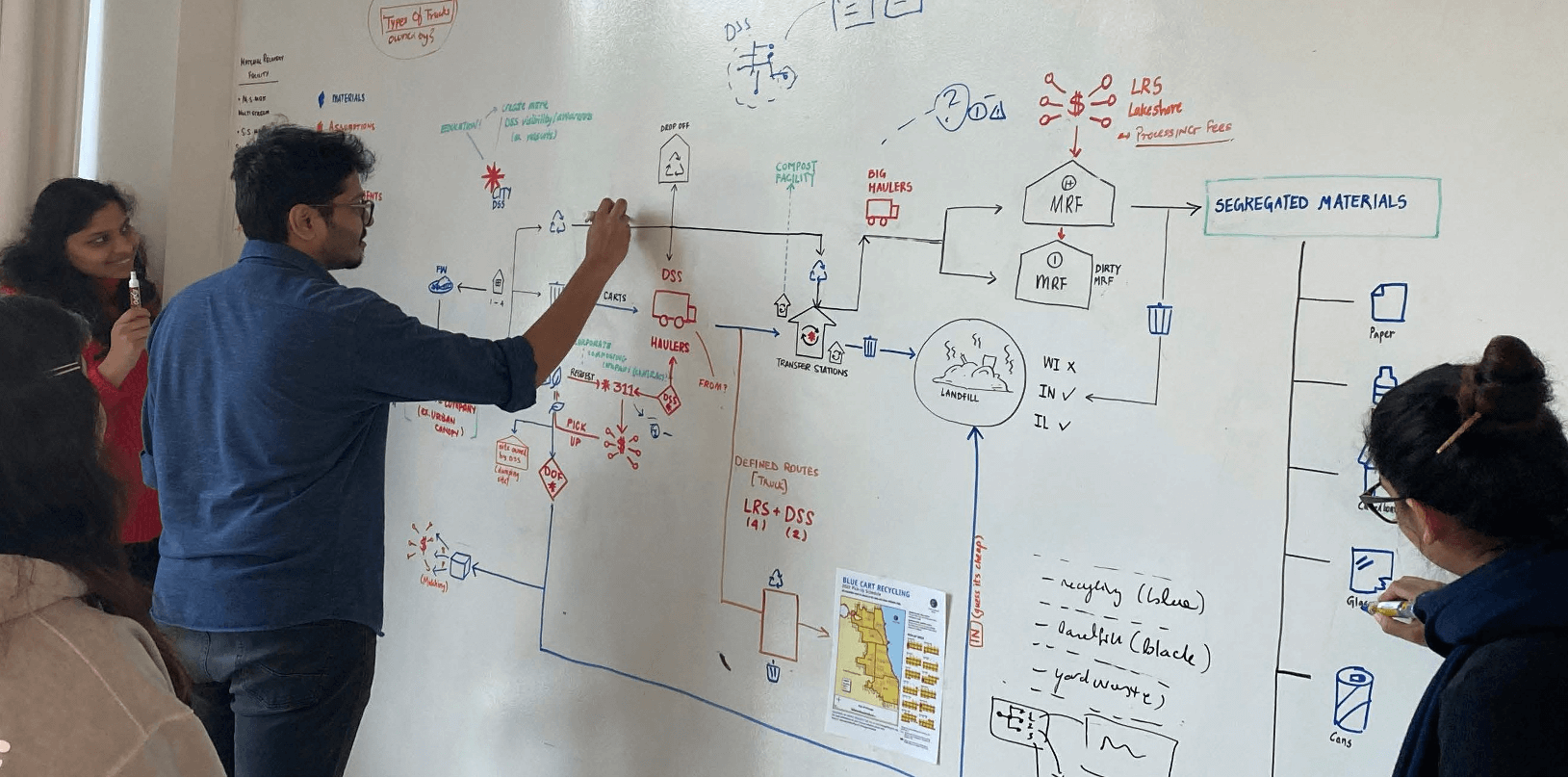
Visualizing Ideas and Insights
A great idea that can’t be communicated is just a thought. This course teaches you to make ideas visible—and persuasive. From diagrams and layouts to physical prototypes and data visualizations, you’ll learn how to choose the right representation for the right audience at the right moment in the design process.
What you’ll learn:
- How to communicate insight and intent through visuals tailored to your audience and context
- How to use prototyping—from rough sketches to full-scale models—to explore ideas and make them testable
- How to create data-informed artifacts that make complex information accessible and explorable
- How to articulate and defend your design decisions with clarity
Course modules:
- Effective Visual Communication — Layout, typography, sign systems, and audience-driven communication
- Prototyping as Explanation — Sketching, collage, paper modeling, scenarios, and full-scale prototypes as tools for thinking and communicating
- Interaction Fundamentals — Narrative and interactive representations of complex information

Building Human-Centered Innovations
Who are you designing for? This course teaches you to answer that question rigorously—and responsibly. You’ll learn the research methods, inclusive design principles, and ethical frameworks that separate good intentions from good design. Whether you’re building a product, a service, a system, or a policy, this course gives you the tools to center the people who matter most.
What you’ll learn:
- How to define and research appropriate audiences with sensitivity and rigor
- How to plan and conduct a goal-driven user research study and integrate findings into your process
- How inclusive design principles account for physical, perceptual, cognitive, social, and cultural differences
- How to evaluate the ethical dimensions of representing people and data
Course modules:
- Human Diversity and Modes of Experience — How designs include and exclude people, and what that means for design choices
- Inclusive Design, Accessibility, and Ethical Stances — Diagnosing issues, applying best practices, and making the case for inclusion
- User Research for People-First Design — Selecting research methods, designing studies, and translating findings into design decisions