Impact by Design

Impact by Design
Lessons from Medical Drones to Kitchen Tools and Beyond
By Thamer Abanami and Albert Shum
Foreword by John Maeda
A medical drone. A prescription bottle. A water filter. A $35 computer. A kitchen peeler. On the surface, unrelated—yet each transformed entire systems and improved millions of lives. Impact by Design asks how—and uncovers what these breakthroughs share.
Now available for pre-order.
What This Practical Guide Provides
Great design makes impact look inevitable. Spoiler alert: it isn’t.
Written by Thamer Abanami and Albert Shum—design and technology leaders who spent decades at Microsoft and Nike shaping products—Impact by Design reveals nine repeatable patterns for change that lasts.
For Designers, Entrepreneurs, Educators, and Leaders
Impact by Design is a practical guide to creating change, providing patterns of impact you can reference whether you’re shaping a product, a service, or a whole system. The book asks, and answers:
- How do seemingly simple objects—a peeler, a filter, a $35 computer—achieve transformation at scale?
- Why do some innovations reshape entire systems while others stall?
- What can you do differently, starting now, whatever you’re designing?
Where Silicon Valley says “move fast and break things,” the authors make the case for moving fast to fix things. Real innovation isn’t measured by what technology can do, they write, but by what it does for people.
CONTENTS

Foreword by John Maeda
Maeda, author of The Laws of Simplicity and How to Speak Machine, frames the stakes: in the age of AI, technology must be measured by how it elevates lives, not how fast it changes the game.

Thamer Abanami
Introduction
Thamer Abanami (pictured) and Albert Shum recount how their project began at ID, and why five ordinary objects led them to a bigger question about how impact really happens.

Part 1: The Five Stories
Part 1 takes you inside five innovations, from the moment of insight to global impact:
- Zipline: Transforming Medical Access.
Autonomous drones that cut maternal deaths from postpartum hemorrhage by 51% in the Rwandan facilities they served—and rerouted a national supply chain in the process. - ClearRx: Reimagining the Prescription Bottle.
One designer’s frustration with her grandmother’s medicine cabinet helped catalyze the first national patient-centered labeling standards. - LifeStraw: Extending Access to Safe Water.
A filter that has reached nearly 12 million children and brought a debilitating disease to the brink of eradication—without a vaccine. - Raspberry Pi: Updating Computer Education.
A $35 computer built to teach kids that shipped 68 million units and quietly transformed industrial applications. - OXO Good Grips: Revolutionizing Everyday Tools.
A peeler designed for arthritic hands that changed how an entire industry thinks about ergonomics.

Part 2: The Nine Patterns
Part 2 distills those stories into nine patterns, seen through Human, Systems, and Catalyst lenses:
Human: innovation begins with genuine insight, not assumption.
1. Observing in Context
2. Embracing the Margins
3. Crafting Insight into Form
Systems: solutions succeed by understanding the full context they operate within.
4. Centering Stakeholders
5. Transforming Constraints into Advantages
6. Understanding the Whole Problem
Catalyst: solutions become lasting realities through deliberate choices about mission, structure, and strategy.
7. Embedding Purpose
8. Cultivating Growth
9. Creating Strategic Power
These aren’t prescriptive steps. They’re ways of seeing you can carry into your own work.

Albert Shum
Afterword
Building Futures That Matter: Thamer Abanami and Albert Shum (pictured) close with a call to design deliberately—right now.
AUTHORS
Thamer Abanami
Thamer Abanami is Chief Product Officer at Adapts, a codebase intelligence platform, and founder of Lumova, a product and strategy advisory. For more than 20 years, he has worked on products, platforms, and systems that have reached more than a billion people—experience that has shaped how he thinks about product, technology, and the judgment it takes to turn an idea into something real. He builds products, advises the people building them, and writes about what makes those products matter.
Albert Shum
A design leader with more than 25 years across Nike and Microsoft, Albert retired from Microsoft as Corporate Vice President of Design, where he led experiences spanning Windows, Xbox, HoloLens, and web products used by more than a billion people. A longtime advocate for responsible design, he holds a master’s degree in product design from Stanford and a bachelor’s degree in mechanical engineering from the University of Waterloo.
Learn to Design with Impact
Build the skills to lead through design. Explore our in-person and remote graduate programs.
Bring design-driven leadership to your team with a work-integrated approach, fit for your organization’s needs.
Put design to work on the world’s most pressing problems in healthcare, food systems, policy, and beyond.
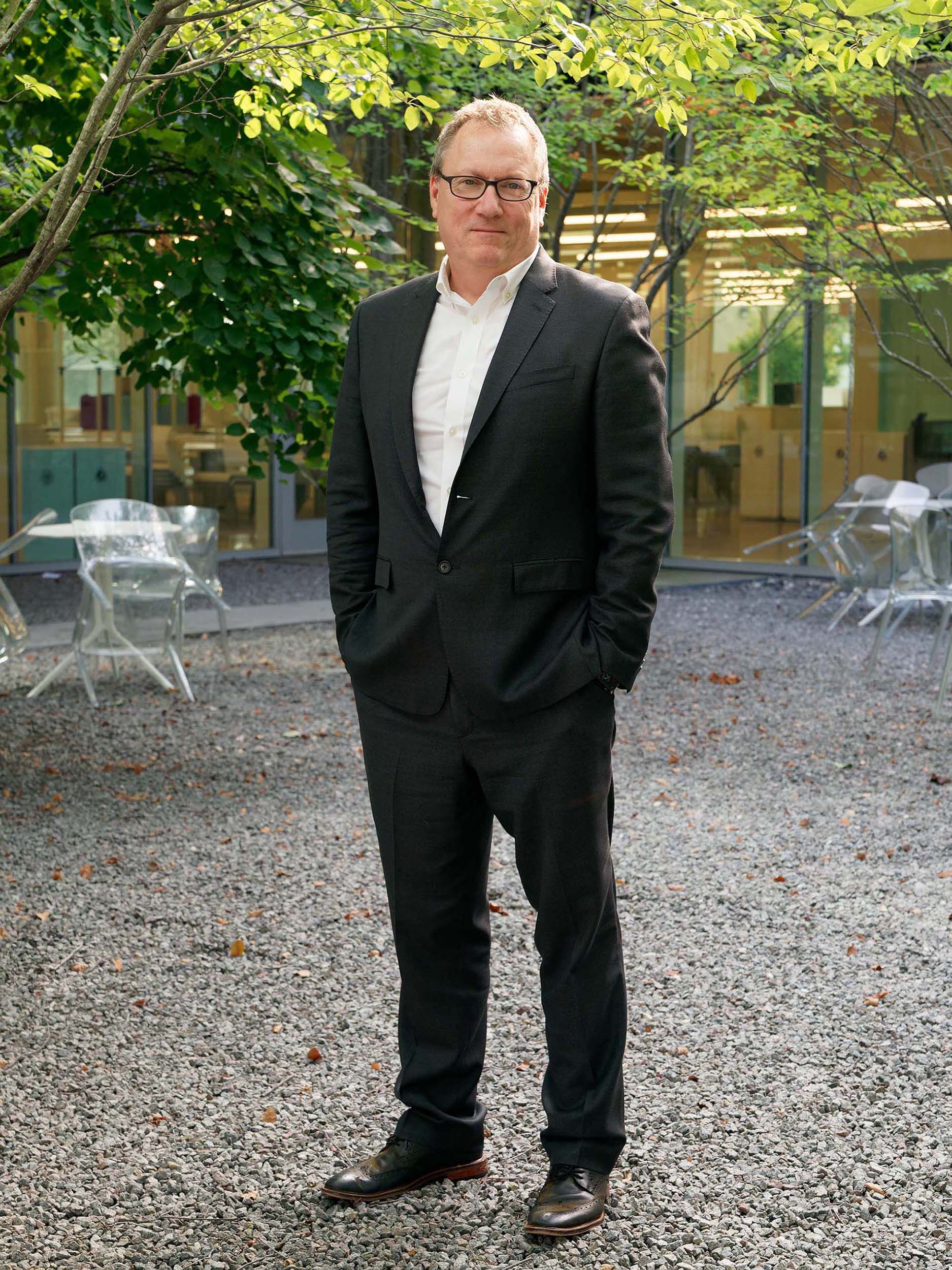
Peter Zapf
Director of Partnerships and Strategic Initiatives
Want to explore what design-driven change could look like in your organization? Let’s think together.